

Buggy topic guide
Newborn activity tracking without turning care into data entry
Quick answer
A newborn daily log should answer ordinary questions when everyone is tired: when was the last feed, how long was the nap, and what has changed since the previous handoff? It does not need to become a perfect diary.
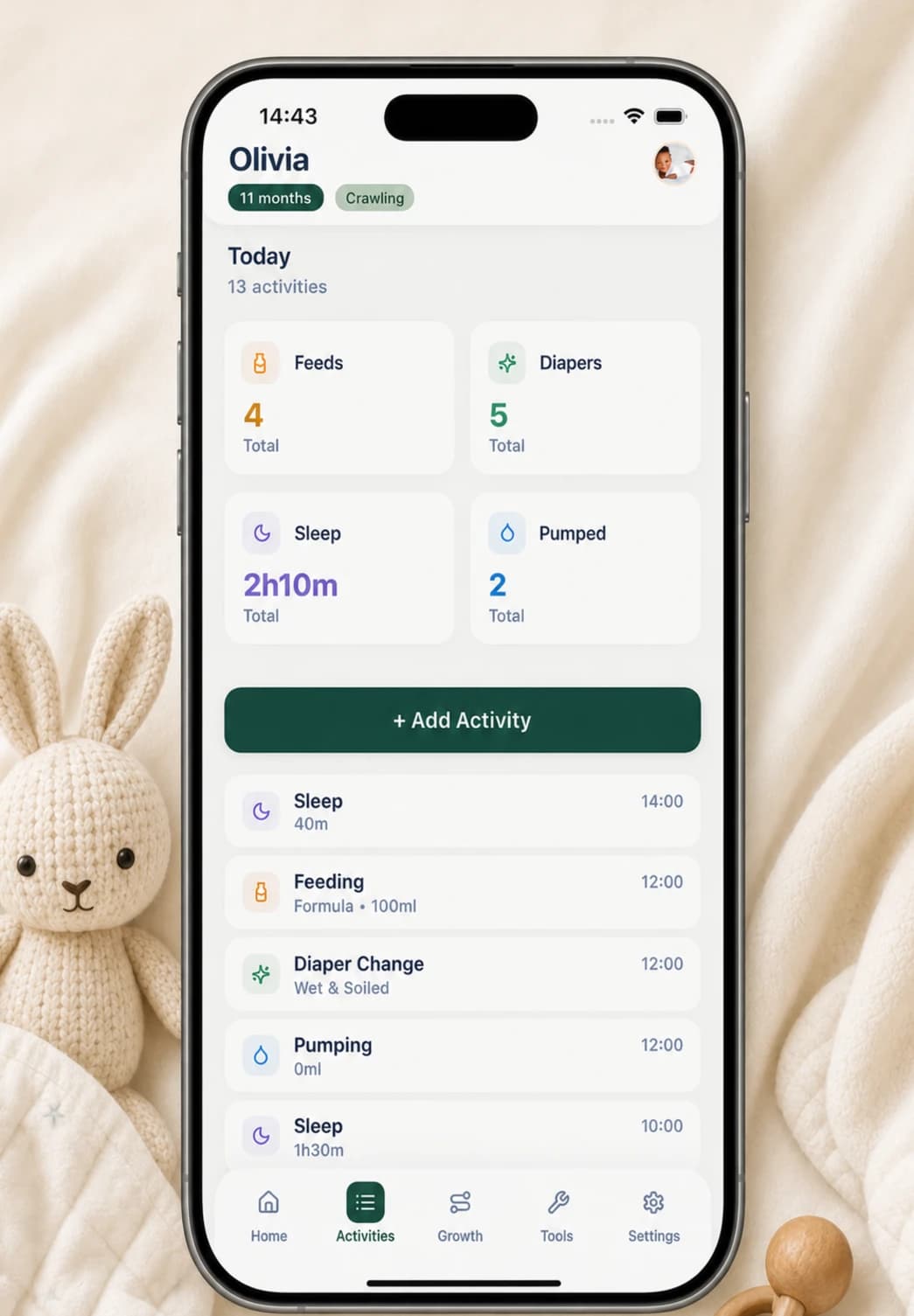
Record the few details you will use
Many families begin with feeds, sleep, and diaper changes. Pumping, growth measurements, medicine notes, or custom events can be added when they are relevant to the family’s routine.
Start with the time and activity type. Add amounts, durations, or notes only when they will make the record more useful later. A smaller log that is easy to keep is better than a detailed system that is abandoned.
Make the next entry easy
Newborn tracking often happens one-handed and at inconvenient hours. The useful interaction is the one that can be completed quickly, corrected later, and reviewed without digging through menus.
Missed entries are normal. Past-date editing matters because memory rarely arrives in perfect chronological order.
Use the log for recall and handoffs
A recent timeline can help another caregiver understand what already happened without a long verbal recap. It can also make it easier to bring specific observations to a pediatric appointment.
A tracking app is an organizational tool, not a diagnosis. Questions about feeding, hydration, growth, sleep safety, or illness belong with a qualified health professional.
Choose the storage model deliberately
Daily care records are personal. Check whether the tracker requires a login, sends the baby record to a company database, or keeps it locally. Then weigh that against features such as live caregiver sync.
Buggy keeps the baby record on the device and does not require a Buggy account. It favors a private local timeline over automatic cross-device sharing.
Topic trail
Continue through the guides
Baby tracking
How to track baby feeding, sleep, and diapers without making it a second job
A low-pressure system for logging feeds, sleep, and diapers: what to record, how to correct gaps, review patterns, and share a useful summary.
Read guideBaby tracking
How to choose a baby feeding tracker without an account
Choose a no-account feeding tracker by comparing fast logging, useful fields, local storage, review, exports, caregiver sharing, and limitations.
Read guideBaby tracking
How to share a baby routine with a caregiver without overcomplicating it
A short handoff structure for the details another caregiver genuinely needs.
Read guideQuestions, answered plainly
What should a newborn tracker record?
Feeds, sleep, and diaper changes are common starting points. Add pumping, growth, medicine notes, or custom events only when they are useful for your family or clinician.
Do I need to log every newborn activity?
No. A log is a memory aid, not a performance score. Record the information that helps with care, handoffs, or a professional conversation.