

Baby sleep
What is a wake window?
Quick answer
A wake window is the time between the end of one sleep period and the beginning of the next. It is a planning shorthand some families use for naps and bedtime—not a medical target, a rule a baby must meet, or a prediction that sleep will happen at a particular time.
Start the clock when the previous sleep ends
For a consistent home record, count from when the baby wakes from the previous nap or nighttime sleep until the next sleep begins. If you only remember an approximate wake time, keep the estimate approximate rather than creating false precision.
A wake window is not the same as total sleep over 24 hours, time in bed, or the length of a nap. Those measurements answer different questions, which is why a single wake-window number cannot describe a baby's overall sleep.
- Previous sleep ends: the wake window begins.
- Next sleep begins: the wake window ends.
- A brief stir during sleep does not automatically need to become a new tracked window.
- Use one definition consistently if more than one caregiver records the day.
Treat age bands as estimates, not clinical ranges
Published health guidance includes recommended ranges for total sleep across broad age groups, and it also recognizes individual variation. That is different from prescribing a wake-window schedule. Buggy's wake-window age bands are general planning estimates; the health and safe-sleep sources below do not validate those bands as clinical thresholds.
Do not stretch or shorten a baby's awake time just to make a calculator turn green or match a chart. Feeding, a short previous nap, illness, travel, development, and the baby's behavior can all change the practical plan for the day.
Combine the clock with the day in front of you
The useful question is not whether the baby passed or failed a window. It is whether a rough time range helps the caregiver prepare for the next transition without constantly doing mental arithmetic.
If the estimate conflicts with the baby's behavior, a clinician's individual advice, or a health concern, the estimate is the least important input. A wake-window calculator cannot evaluate illness, feeding, breathing, development, or the reason a baby is unsettled.
- Use the last wake time as a reminder, not a command.
- Notice whether the previous sleep was unusually short or the day is otherwise different.
- Follow child-specific instructions from a qualified professional.
- Stop using the estimate if it adds pressure without helping the routine.
How Buggy calculates a planning window
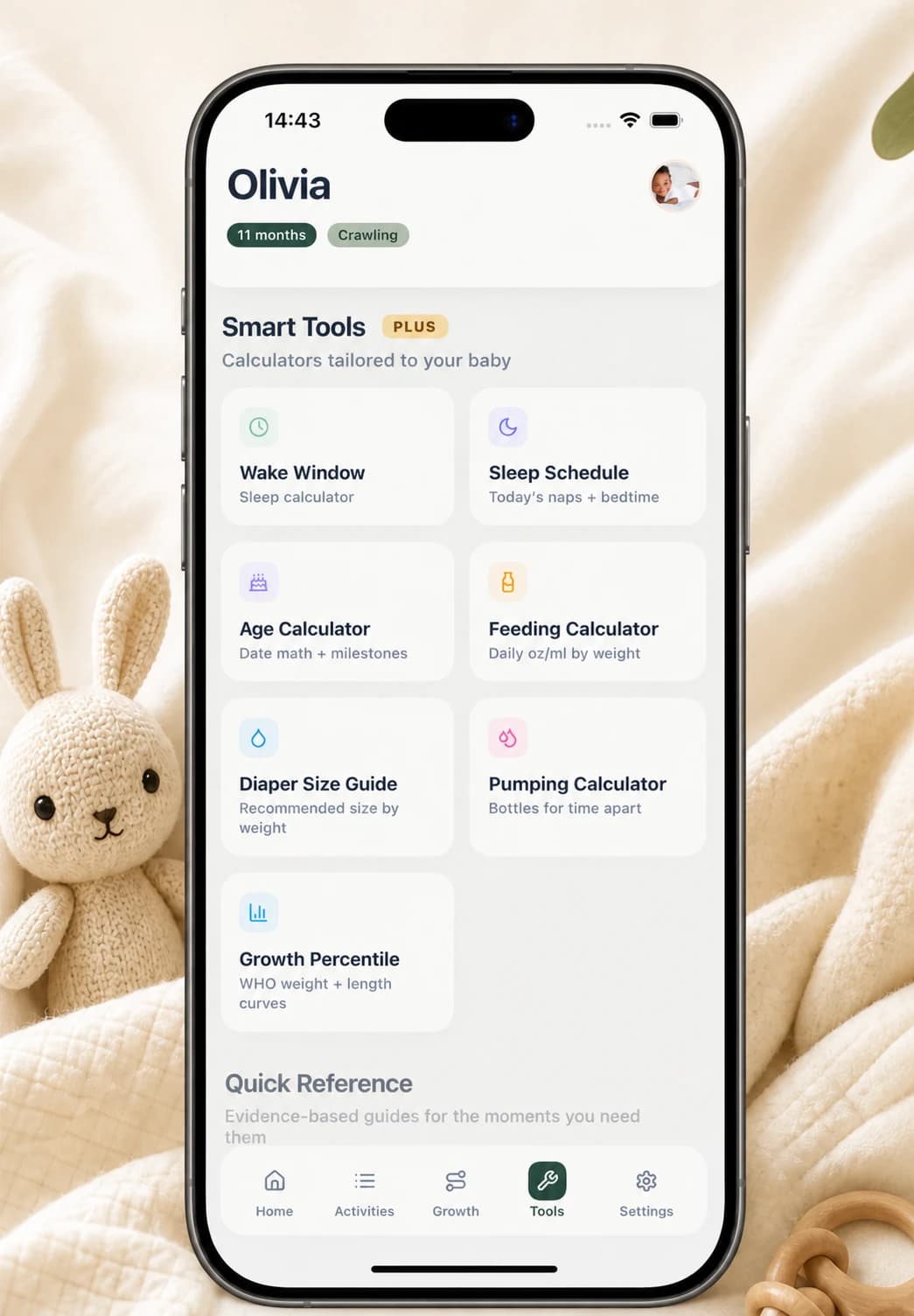
In Buggy's Tools tab, the Wake Window tool uses the baby's recorded date of birth and a last-wake time. The time defaults to now and can be adjusted in five- or 15-minute steps. The result shows an age-banded range and a midpoint for planning.
The result is calculated from Buggy's built-in age bands; it is not personalized from the baby's history and it is not medical advice. Buggy can also surface a shortcut to the tool after a recent recorded sleep, but the parent or caregiver still chooses the wake time and decides whether the estimate is useful.
A wake-window estimate never changes safe-sleep guidance
Whether a nap starts earlier or later, the safe-sleep basics remain the same. CDC and American Academy of Pediatrics guidance says infants should be placed on their back for every sleep, on a firm, flat, non-inclined surface intended for infant sleep, with soft objects and loose bedding kept out of the sleep area.
A tracker or calculator cannot monitor breathing, assess a sleep space, or prevent sleep-related death. For persistent sleep concerns, a sudden change that worries you, or any safety or health question, speak with a qualified pediatric professional instead of relying on another calculated window.
Questions, answered plainly
When does a wake window start?
It starts when the previous sleep period ends and the baby wakes. It ends when the next sleep begins. If the wake time is approximate, treat the resulting window as approximate too.
Are wake-window ranges medical guidance?
No. Wake windows are a common planning shorthand, but Buggy's age-banded ranges are not clinical thresholds or a diagnosis. Use them as optional estimates alongside the baby's behavior and individual professional advice.
Should I keep my baby awake until the end of a calculated window?
A calculator cannot make that decision for an individual baby. Do not force a timing target simply to match the app; consider the baby's behavior, the day's context, and any guidance from a qualified pediatric professional.
Can a wake window predict the next nap?
No. It can turn a last-wake time and a general age band into a rough planning range, but it cannot know when a baby will fall asleep or why the day differs from the estimate.
Sources and further reading
- Sleep-Related Infant Deaths: Updated 2022 Recommendations for Reducing Infant Deaths in the Sleep EnvironmentAmerican Academy of Pediatrics
- Child Sleep Duration Health AdvisoryAmerican Academy of Sleep Medicine
- Providing Care for Babies to Sleep SafelyCenters for Disease Control and Prevention